

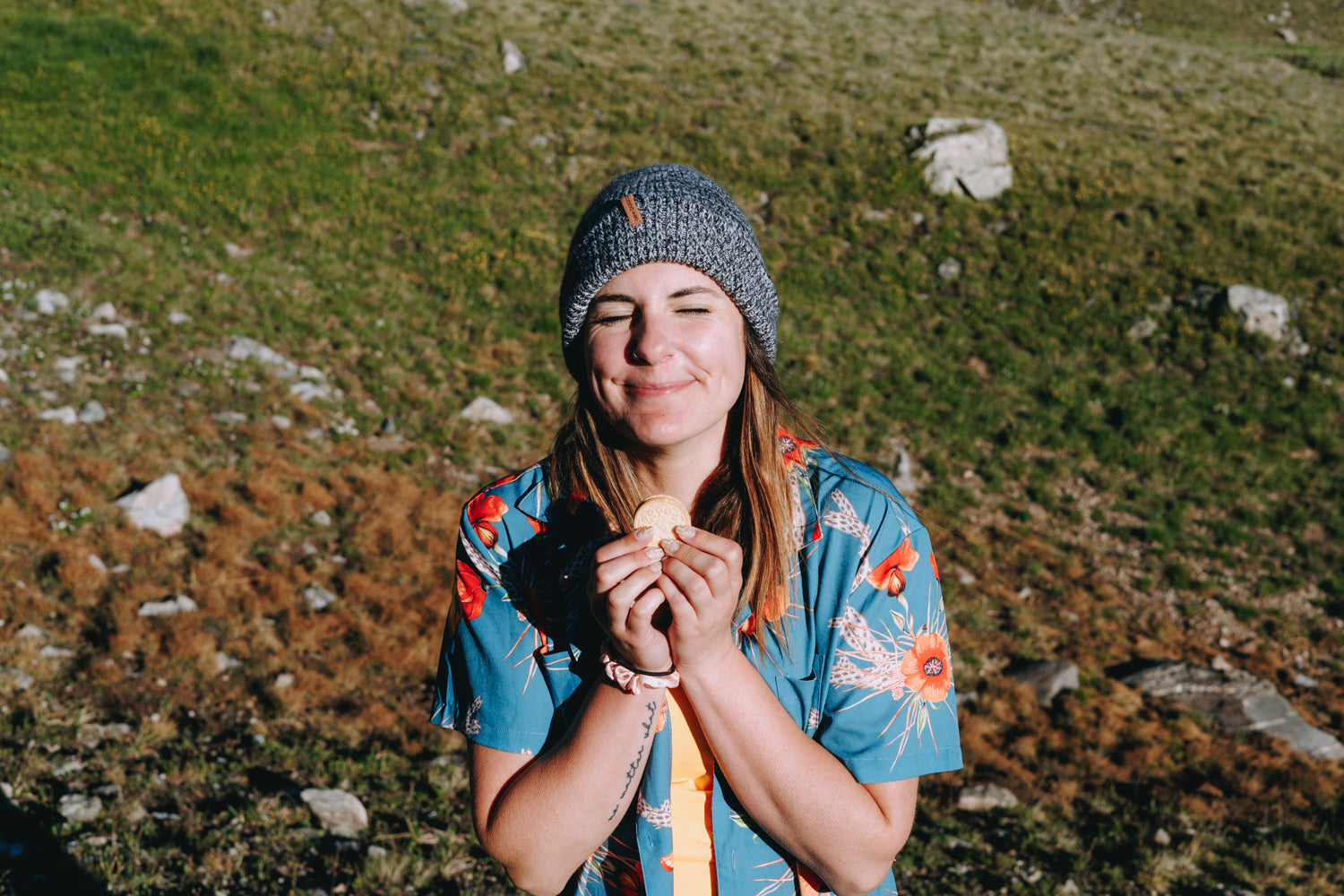

I thru-hiked the Appalachian Trail in 2016 and the Pacific Crest Trail in 2018. Those miles changed how I think about backpacking, but they also changed how I think about friendship, comfort, time, and what makes a day outside worthwhile. TownShirt grew out of that experience. The Trail Log is where we want to explore it.
We make and sell hiking apparel. But there are more interesting things to talk about than shirts. We want to write about the people we meet, the places we pass through, the decisions we make, and the things we only understand after spending enough time outside to question what we thought we knew.
Where we're coming from
Most of what I have to say about backpacking comes through the lens of a thru-hiker. That matters, and it's worth being upfront about. Repeating something every day for months changes how you evaluate it.
A camp chair might be a great thing to carry for a two-day, twenty-mile trip with long afternoons at camp. Carrying it for thousands of miles when you mostly want to eat and sleep might be a different story. A cheap foam sit pad could make more sense. Neither hiker is wrong. They're solving different problems.
That's the kind of distinction we want to make. How does a piece of gear work as part of a complete system? What feels convenient for a weekend but becomes irritating after a month? What is worth the weight because it genuinely makes your days better? A thru-hike offers one way to answer those questions, not the only way.
You don't have to be a thru-hiker to belong here. Day hikers, weekend backpackers, section hikers, and people who simply like being outside are part of the same community. The goal isn't to make everyone hike the same way. It's to explain where an opinion comes from so readers can decide whether it applies to their own experience.
The people are part of the point
When I think about my PCT hike, I don't start with a gear list. I think about my trail family. We had different jobs, backgrounds, and lives waiting for us at home. On trail, we became part of one another's daily lives. Years later, those relationships are still among the most important things I carried home.
It's why Appalachian Trail Days feels like a family reunion cleverly disguised as a hiking festival. I attended as an AT thru-hiker in 2016, helped at Vargo's booth the following year, returned after my PCT hike, and eventually came back as a vendor. My role changed, but the people kept connecting different chapters of my life.
We want to tell stories about those relationships, about trail towns and the people who make them feel familiar, and about the sometimes difficult transition back home. We also want room for the ridiculous parts: privies, strange trail food, running jokes, and the kinds of stories that don't make sense until you've spent a little time around hikers.
The natural world belongs here, too. A red eft appearing after the rain or a bird calling outside your shelter can become inseparable from your memory of a place. Understanding what you've been walking past can make the next walk more interesting.
What the miles actually taught us
There is no shortage of advice about what backpackers should buy or how little their packs should weigh. Those can be useful conversations, but the more interesting questions come afterward. Did the equipment work? Did the hiker enjoy using it? What changed between the start and the finish, and why?
I used to say I cared more about what hikers finished with than what they started with. Even that misses most of the story. I finished the AT in New Balance shoes, but I only walked roughly 200 miles in them. I spent about 1,700 miles in Dynafit shoes. Looking only at my starting and finishing gear would leave out the shoes I used for most of the hike. And finishing with something doesn't prove you liked it.
When my buddy Scooby sat in my basement after his winter southbound AT thru-hike and unpacked his gear, the interesting part wasn't just what he had. It was why. What broke? What went home? What did he replace? What did he keep using even when it wasn't ideal? The gear list was the beginning of the conversation, not the answer.
I've made my share of questionable decisions, too. On the PCT, I replaced a lightweight backpack and shelter with heavier alternatives that made my life better. I also finished the AT carrying six pairs of socks. Thousands of miles haven't made every decision brilliant. They've given me plenty of chances to learn why some decisions were not.
We want to write about routines, tradeoffs, and how a whole backpacking system works in practice. Base weight matters, but so do water carries, food choices, sleep, and how efficiently you move through a day. A spreadsheet can tell you what something weighs. It can't tell you whether it improved your hike.
Experience should lead to better questions
Experience is useful, but it isn't a credential that makes every opinion correct. Hiking thousands of miles can help someone recognize a pattern without explaining why that pattern exists. We want to be comfortable saying what we've observed, what we think it means, and what we still don't know.
When a subject calls for knowledge beyond our own, we want to learn from people who have it: naturalists, trail workers, coaches, designers, retailers, and other hikers whose experiences differ from ours. Sometimes the most useful result of asking a question is finding out our first assumption was wrong.
That also means challenging popular advice without pretending that every convention is foolish. A good recommendation should survive questions about context, tradeoffs, and actual use. We would rather help someone understand a decision than hand them another rule to follow.
We're part of the industry we're writing about
Running TownShirt gives us a second perspective on hiking. We see how products are designed, promoted, reviewed, and sold. That raises questions about why certain gear becomes popular, how recommendations spread, and what influence brands have on the things hikers believe they need.
We also have a financial interest in this community. We sell apparel, work with retailers, sponsor events, and want people to discover our products. We shouldn't pretend otherwise. When those relationships matter to a story, we should say so. We should distinguish firsthand observations from interpretations, avoid assigning motives we can't know, and hold our own practices to the same standards we apply to other brands.
Our Why We Made It stories have a place here because the decisions behind a design can be interesting. But the Trail Log shouldn't become a catalog with longer captions. A story needs to offer something worthwhile even to someone who never buys a TownShirt product.
What we hope you find here
The Trail Log has room for practical trail skills, trail culture, perspectives that challenge familiar assumptions, and the stories behind what we make. Those categories help organize the writing, but they aren't boundaries around what hiking can teach us.
We hope you leave with a better question about your gear, a new appreciation for something you noticed in the woods, or a story about another hiker that stays with you. If you've thru-hiked, some of it may feel familiar. If you haven't, we hope it helps explain why a walk can remain such a big part of someone's life long after the miles are over.
That's what we want the TownShirt Trail Log to be: a place where experience starts the conversation, curiosity keeps it going, and the people and places matter at least as much as the gear.