

I have a confession that probably isn’t ideal for someone who owns an apparel company: I don’t really know how to market one. TownShirt is the first business I’ve owned that sells physical products directly to consumers. Before this, I built a safety and risk management consulting company, and I’ve never advertised, not once. My website is complete trash; it generates essentially no leads and is practically a dead end if you’re actually trying to contact me. I have business cards, decent branded pens, and what I would argue is one of the finest root beer koozies ever handed out by a safety consulting company. That’s about it, and yet the phone still rings. It rings because somebody worked with me before, changed companies, and called again, or because somebody had a problem and asked someone they trusted who they should call. That’s how I’ve always understood business: do good work, know good people, and answer the phone when somebody needs help. Then I started TownShirt.
Apparently, You’re Supposed to Market Things
TownShirt dropped me into an entirely different world. Suddenly there were conversion rates, attribution windows, influencers, affiliates, UGC, SEO, retargeting, and ROAS—which I had to look up while writing this and learned means Return on Ad Spend. TownShirt has been around for years, and my paid advertising history is almost comically small. I’ve boosted a handful of Instagram posts, usually for a hundred or two hundred bucks, and bought one advertisement in the PCTA Communicator. That’s pretty much the advertising empire. This isn’t some brilliant anti-advertising strategy, and there isn’t a marketing genius hiding behind the curtain. I genuinely don’t know what I’m doing. Fortunately, a whole bunch of hikers apparently decided to do it for me.
The TownShirt Family Photo Album
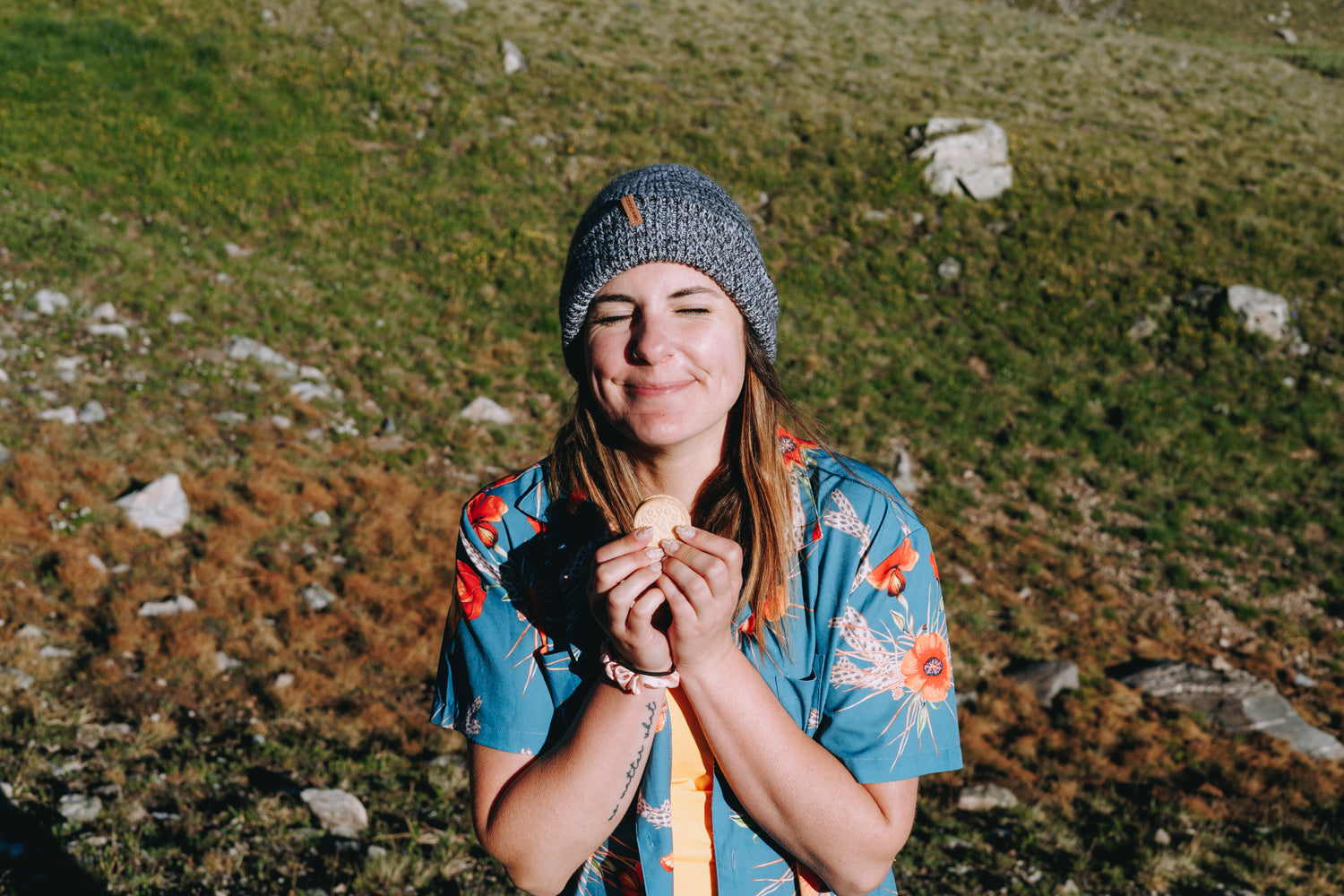
I’m not a photographer, and I take almost none of the photographs you see from TownShirt. People buy my shirts, hike and run races in them, take them on thru-hikes, wear them to trail events, stand on summits, wander through trail towns, get filthy, take pictures, and tag me. I do my absolute best to share those photos. The marketing world would probably call that “user-generated content,” but I’ve never really thought of it that way. To me, my social media has always felt more like the TownShirt family photo album. There’s something really cool about scrolling through years of it because these aren’t models I hired to make TownShirt look like people wear it; they’re the people who actually do. Some of the pictures are beautiful, and some aren’t. Some were taken by professional photographers, while others look like someone wiped a Pop-Tart crumb off their phone lens before taking them. It doesn’t really matter, because they happened. I’m not trying to make TownShirt look like people wear it; I’m trying to show you the people who do. Without really intending to, those people became a huge part of how TownShirt grew.
Then I Learned That You Can Buy UGC
This one took me a minute. TownShirt gets a lot of cold pitches these days from influencers, affiliate marketers, UGC creators, marketing agencies, SEO companies, and people promising growth, content, or a call about something. The pitches have gotten remarkably good at sounding personal. They know my story, know I’m a thru-hiker, mention a specific product, and explain why it would be perfect for their content or audience. Sometimes it feels like someone has spent a lot of time learning about TownShirt, but when you dig a little deeper, you realize they may have learned the website without necessarily learning the community. The UGC pitches are particularly strange to me because TownShirt already has a tremendous amount of user-generated content; I just never called it that. Someone bought something from me, wore it somewhere, took a picture, and decided to share it. Now there’s an entire industry where a brand can pay someone who isn’t a customer to create content designed to resemble the kind of thing a customer might have posted. That’s not necessarily bad. There are incredibly talented people making this stuff, and there are legitimate reasons for brands to hire them. But it creates a strange question for TownShirt: Why would I pay someone to join the family photo album?
I Already Have TownShirt People
If someone’s first interaction with TownShirt is asking me to pay them to wear TownShirt, I’ve probably started the relationship in the wrong place. That’s not because I don’t want to pay people; actually, I’d like to do more of it. But there are people who have been wearing my shirts for years. They bought them with their own money, took them thousands of miles, sent me pictures from places I’ve never been, talked about TownShirt with other hikers, showed up at events wearing my stuff, and recommended me when there wasn’t a commission waiting on the other side. They’re already in the TownShirt family photo album. Some are photographers, artists, designers, video makers, writers, web experts, or email marketers. Others are simply interesting hikers who understand this community far better than someone who discovered TownShirt yesterday while looking for brands accepting UGC pitches. If I’m going to spend money, why wouldn’t I start with them? I don’t want to pay people to become TownShirt fans; I’d rather pay TownShirt fans for the things they’re already good at.
Why Affiliate Marketing Never Felt Right
TownShirt had an affiliate program for a few years, and there were really good people in it. That’s important. Some supported TownShirt before there was ever a commission attached, some genuinely loved my products, and some are people I still want to work with. This isn’t an indictment of them. Eventually, I realized I just didn’t particularly like the system, and maybe my safety consulting business is partly responsible. I recommend competitors all the time. Sometimes another consultant knows more about a particular subject, is better equipped for a job, will probably be cheaper, or can help when I’m simply too busy. So I give the client a phone number and say, “Call this person.” I’ve never asked that person for 10% of the project. There’s no tracking link, discount code, or report confirming that I successfully converted the referral. If I recommend someone, my reputation is attached to that recommendation, and that’s enough incentive to make sure I’m sending someone to a person I actually trust. That’s what a recommendation has always meant to me.
Then there’s the internet, where every recommendation seems to come with an affiliate link or a discount code: recommend a backpack, a tent, a quilt, or a shirt, and there’s a transaction attached. None of that means the recommendation is dishonest, and that’s the problem. The recommendation may be completely sincere; the person might have recommended the exact same product without receiving a penny. But now the person reading it has to wonder. Somewhere along the way, an enormous online economy emerged in which recommendations became transactions. TownShirt participated in it, but eventually it stopped feeling like something I wanted to participate in, so I ended TownShirt’s affiliate program.
Paying for Work Is Different
Ending affiliate marketing doesn’t mean TownShirt doesn’t want to pay hikers; it’s almost the opposite. One of the ideas behind TownShirt from the beginning was to keep as much of the money in the hiking community as I reasonably could. Hikers are good at things. They’re graphic designers, illustrators, surface designers, photographers, web designers, writers, marketers, and product designers. When TownShirt needs those things, I’d rather find somebody in this community who’s already great at the work than hire someone outside it and teach them how to sound like a hiker. If I need photography, artwork, or video, I should pay a photographer, artist, or filmmaker. If I need someone to take a prototype hundreds of miles and tell me everything that’s wrong with it, I should compensate them for doing that work. If I need help with a website, email, design, or something else I’m terrible at, I should find someone who knows what they’re doing and pay them. There’s an important distinction: I don’t want to pay someone because they have access to hikers. I’d rather pay hikers for the things they’re already good at.
Affiliate Marketing Pays for the Recommendation
This is probably the part I’ve struggled to articulate. Affiliate marketing pays someone when their recommendation produces a sale, while paid UGC can get even stranger because sometimes you’re paying for something that looks like a recommendation in the first place. Again, that’s not all UGC or all affiliates, and it’s not an accusation that everyone doing either of those things is dishonest. TownShirt participated in affiliate marketing, and I’ll almost certainly continue paying people to create content. I’ll send people products, collaborate with people, advertise things, sponsor events, and work with retailers. I run a company selling shirts, so I need people to know the shirts exist. But there’s a difference between paying someone for their work and paying someone to like TownShirt. That’s the line I’m figuring out.
Maybe I Was Already Doing It Right
TownShirt can’t operate exactly like a safety consulting company. A consulting company can survive because somebody says, “Call Dylan,” but an apparel company has to reach thousands of people I’ve never met. I’m still figuring out how to do that, and maybe I always will be. The longer TownShirt exists, though, the less interested I am in learning every trick the internet has invented for selling things. The company has already shown me another way: someone buys a shirt, wears it, likes it, tells somebody, and takes a picture. I put it in the family photo album. Some of those people eventually become friends, some become collaborators, and some have skills TownShirt needs. Hopefully, I can put some money back in their pockets for using those skills, and then somebody else discovers TownShirt.
It’s not particularly sophisticated, there isn’t much attribution, and the ROAS is apparently impossible to calculate. But it feels a lot like the way my other business grew: do good work, make good stuff, know good people, and when you tell somebody something is good, mean it.
